Every law or decree tells a story, but few carry as much quiet significance as Decreto Supremo 160. On paper, it might seem like a series of rules and regulations, yet behind those words lie real human lives: families making choices, workers seeking fairness, communities hoping for transparency. It’s a decree that touches daily routines, shapes opportunities, and sometimes even protects the vulnerable in ways we barely notice. Understanding it isn’t just about legalities; it’s about seeing the heartbeat of society reflected in a document meant to guide, protect, and transform.
What Is Decreto Supremo 160?
Decreto Supremo 160 is more than just a legal decree; it’s a powerful tool that shapes lives, protects people, and drives meaningful change. Though its number might seem ordinary, its impact resonates deeply in health, labor, and governance, touching everyday moments in ways most of us rarely notice. It’s a reminder that laws can be living forces, quietly guiding societies toward fairness, safety, and hope.
Definition and Legal Nature
The number “160” does not represent a single universal law. Instead, it is a label used in different countries and years to identify specific decrees. Each version of Decreto Supremo 160 carries its own purpose, its own urgency, and its own emotional weight depending on where and when it was issued. In some places, it protects workers; in others, it safeguards health or ensures transparency. Yet beneath all these differences lies one shared idea: governments trying sometimes imperfectly to organize society in a way that feels fair and structured.
Why the Name “160” Appears in Different Contexts
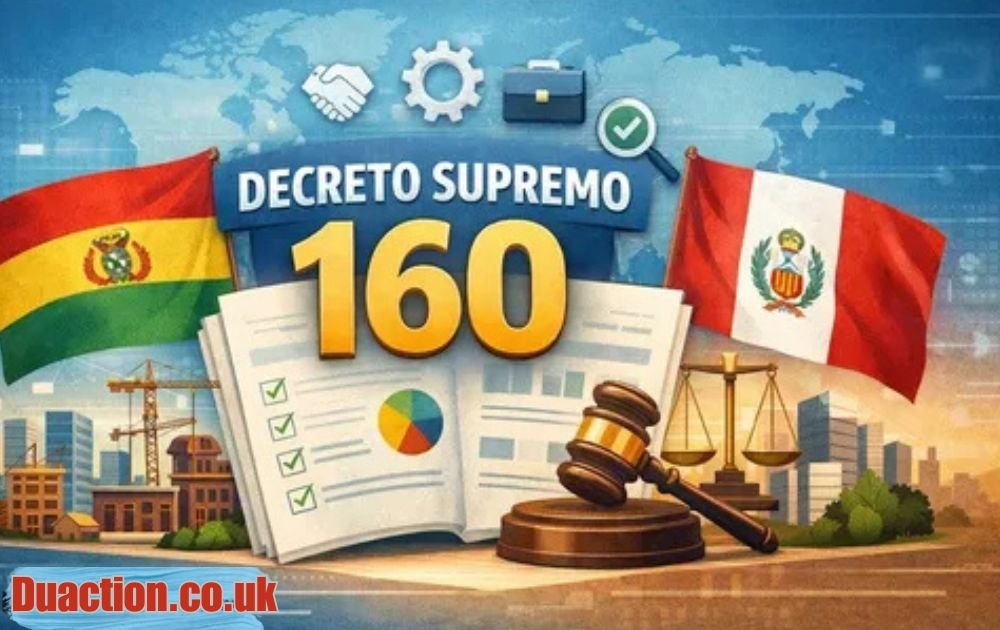
It can feel confusing that the same name exists in multiple countries. But think of it like chapters in different books sharing the same title. The number “160” simply indicates its sequence among many decrees issued over time.In Chile, Peru, Bolivia, and beyond, Decreto Supremo 160 appears in completely different contextsfrom health regulations to economic reforms. This diversity reflects something profound: each society faces its own struggles, and each decree becomes a response to those unique challenges. So instead of seeing it as one fixed rule, it’s better to understand it as a symbol of evolving governancea living reflection of a country’s priorities and concerns.
The Origin and Evolution of Decreto Supremo 160
The story of Decreto Supremo 160 is one of evolution and resilience, shaped by the urgent needs of societies striving for fairness and progress. Born from moments of challenge, it has adapted across countries, reflecting each nation’s hopes, struggles, and determination to protect its people. From reforming labor laws to safeguarding public health, its journey is a testament to the power of thoughtful governance. Every version carries not just rules, but a promise to create a better, more just world.
Historical Background Across Countries
The roots of Decreto Supremo 160 stretch across Latin America, where governments have long used supreme decrees to implement policies quickly and effectively. These decrees often emerge during moments of urgency economic shifts, social demands, or public health concerns.Over time, different countries adapted the concept to fit their own realities. In Chile, it became a tool to regulate food safety and protect citizens’ health. In Peru, it evolved into a mechanism for improving public procurement systems. In Bolivia, it took on the role of strengthening labor rights.
How Governments Use Supreme Decrees
Supreme decrees are powerful because they bridge the gap between laws and real-life action. While laws set the foundation, decrees bring them to life. They define procedures, responsibilities, and consequences.Imagine a law as a promise, and a decree as the steps taken to fulfill that promise. Without these steps, even the most well-intentioned laws would remain abstract. Decreto Supremo 160, in all its forms, represents those steps, sometimes cautious, sometimes bold, but always impactful.
Core Purpose of Decreto Supremo 160
The core purpose of Decreto Supremo 160 goes far beyond legal jargon; it exists to protect people, safeguard fairness, and create systems that truly serve society. Whether it’s ensuring healthier choices, securing workers’ rights, or making governments more transparent, this decree touches lives in meaningful, tangible ways. At its heart, it’s about creating a world where rules don’t just exist on paper they protect, empower, and inspire trust in everyday life.
Protecting Public Interest
At its heart, Decreto Supremo 160 is about people. Whether it addresses food safety, labor rights, or government transparency, its ultimate goal is to protect the public.For instance, in Chile, the decree introduced strict rules for food labeling, ensuring that consumers can clearly see when a product is high in sugar, salt, or fat. This isn’t just about nutritionit’s about giving families the power to make informed choices, about protecting children from misleading advertising, and about reshaping habits that affect long-term health.
Strengthening Governance Systems
Beyond individual protection, the decree also strengthens systems. In Peru, it modernizes procurement processes, making them more transparent and competitive.This may sound technical, but its impact is deeply human. Transparent systems reduce corruption, build trust, and ensure that public resources are used wisely. It means roads get built, schools get funded, and services reach those who need them most.
Decreto Supremo 160 in Chile
In Chile, Decreto Supremo 160 is more than just a regulationnit’s a lifeline for public health. It introduced bold, clear warning labels on packaged foods, empowering families to make informed choices. Every black octagon on a product tells a story of care, caution, and protection for children and adults alike. It’s a quiet revolution in supermarkets, reshaping how people eat and think about nutrition.
Public Health and Food Labeling
Chile’s version of Decreto Supremo 160 is one of the most emotionally resonant examples. It focuses on something we all experience daily food.This decree introduced mandatory warning labels on packaged foods, clearly indicating when products are high in sugar, sodium, calories, or saturated fats.At first glance, it seems simple. But think deeper. It changes how parents shop for their children. It influences what companies produce. It even reshapes cultural attitudes toward food. It’s a quiet revolution happening on supermarket shelves.
Nutritional Warning Labels Explained
These labels are bold, black, and impossible to ignore like stop signs urging caution. They speak a universal language, understandable regardless of education level.And perhaps that’s the most powerful part. They don’t just inform they empower.
Decreto Supremo 160 in Peru
In Peru, Decreto Supremo 160 is more than a government regulation; it’s a beacon of transparency and fairness. It reshapes public procurement, ensuring that contracts are awarded with honesty, efficiency, and accountability. For everyday citizens, it means public resources are used wisely, and for businesses, it opens the door to fair competition. This decree quietly strengthens trust between the government and its people, making progress feel real and tangible.
Public Procurement Reforms
In Peru, Decreto Supremo 160 focuses on improving how governments manage contracts and public spending. It introduces digital platforms, standardized evaluation criteria, and better oversight mechanisms.This might seem distant from everyday life, but it isn’t. Every public projectroads, hospitals, schoolsdepends on fair and efficient procurement. When systems work well, communities thrive.
Transparency and Digitalization
Digitalization reduces human interference, making processes more objective and traceable.It’s like turning on a light in a dark roomsuddenly, everything becomes visible, and trust begins to grow.
Decreto Supremo 160 in Bolivia
In Bolivia, Decreto Supremo 160 stands as a heartfelt commitment to workers’ rights and dignity. It reshapes labor laws, ensuring fair treatment, stronger protections, and a voice for every employee. Beyond rules on paper, it represents hope, justice, and the promise that work can be safe, respected, and empowering for all.
Labor Law Transformations
In Bolivia, Decreto Supremo 160 takes a more personal approachfocusing on workers and their rights. It introduces stronger protections, clearer contracts, and improved dispute resolution systems.This is where the decree feels closest to the human heart. It’s about dignity at work, about fairness, and about ensuring that people are not just employeesbut individuals with rights and voices.
Worker Protection and Rights
From extended maternity leave to anti-discrimination measures, the decree reflects a shift toward more compassionate labor policies.It’s a reminder that progress is not just about economic growthit’s about how people feel within that growth.
Key Features of Decreto Supremo 160
Decreto Supremo 160 is a regulation issued by the Chilean government that establishes safety standards for the storage, handling, and distribution of liquid fuels, aiming to prevent accidents and protect people and the environment.
5 Key Features:
- Sets strict safety requirements for fuel storage facilities and equipment.
- Regulates transportation and distribution processes of liquid fuels.
- Defines responsibilities of companies and operators handling fuels.
- Establishes inspection and compliance procedures by authorities.
- Focuses on risk prevention, including fire, explosion, and environmental hazards.
Why Decreto Supremo 160 Matters Today
Decreto Supremo 160 is more than a legal decree; it touches real lives. It shapes the way we work, eat, and trust the systems around us, giving people protection, clarity, and hope. In a world often full of uncertainty, it stands as a quiet yet powerful promise that fairness, safety, and transparency are possible.
Social Impact
In a world where inequalities still exist, Decreto Supremo 160 plays a role in leveling the field. It gives voice to communities, protects consumers, and strengthens workers’ rights.It reminds us that laws are not just systemsthey are reflections of values.
Economic Influence
Economically, the decree encourages transparency, efficiency, and fairness. It creates environments where businesses can compete honestly and grow sustainably.And when economies grow with integrity, societies benefit as a whole.
Challenges in Implementation
Implementing Decreto Supremo 160 is rarely straightforward; it’s a journey filled with hurdles that test patience and resilience. From unclear legal language to institutional resistance, even the best intentions can struggle to take root. These challenges are not just bureaucratic; they affect real people, delaying the protections, fairness, and opportunities the decree promises. In many ways, the struggle to implement it reflects the human effort required to turn ideas into meaningful change.
Legal Ambiguity
Institutional Barriers
Changes in Business Practices
Impact on Everyday People
For individuals, the impact is tangible. Healthier food choices, fairer workplaces, and more transparent systems all contribute to a better quality of life.It’s not just policyit’s daily experience.
Future of Decreto Supremo 160
As societies evolve, so will Decreto Supremo 160. Future versions may address new challengesdigital transformation, environmental sustainability, or global health concerns.While rooted in specific countries, the principles behind the decree resonate globally. Transparency, fairness, and protection are universal needs.
Final Thoughts
Decreto Supremo 160 is more than a legal termbit’s a reflection of humanity’s ongoing effort to create systems that work for everyone. It carries stories of protection, reform, and hope. Whether shaping what we eat, how we work, or how governments operate, its influence runs deeper than words on paper.And perhaps that’s its true meaningnot just regulation, but transformation.
FAQs About Decreto Supremo 160
1. Is Decreto Supremo 160 the same in every country?
No, it varies by country and year, each with its own purpose and legal scope.
2. What is the main goal of Decreto Supremo 160?
Its main goal is to regulate specific sectors while protecting public interest and improving governance.
3. Why is Chile’s Decreto Supremo 160 important?
It introduced clear food labeling rules that help people make healthier choices.
4. How does it affect businesses?
Businesses must comply with regulations, which may involve operational changes but also create opportunities.
5. Can Decreto Supremo 160 change over time?
Yes, it evolves as governments update policies to address new challenges.