
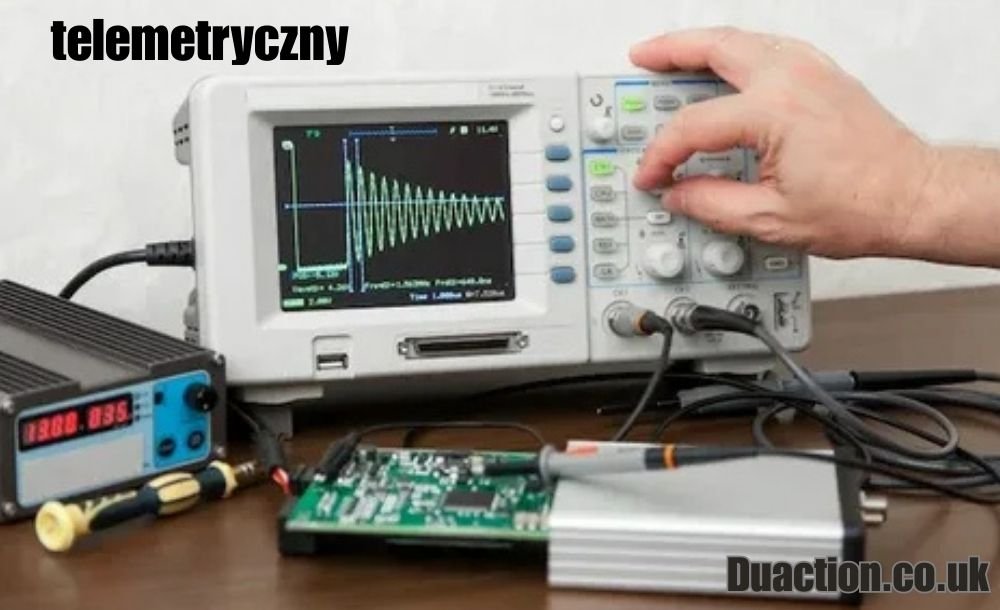
As modern technology becomes more connected, telemetryczny systems help organizations track performance, detect problems early, and improve efficiency. By combining sensors, communication networks, and data analysis platforms, telemetryczny has become a powerful tool that supports innovation in fields such as transportation, agriculture, industrial automation, and smart devices.
Origin and Definition of Telemetryczny
The term telemetryczny originates from the Polish language and is related to telemetry, which means measuring and transmitting data from a distance. It comes from the Greek words “tele” (distant) and “metron” (measure), literally translating to “measuring from afar.” Telemetryczny systems collect information from devices, sensors, or environments and send it to a central system for monitoring and analysis, making remote observation efficient and reliable. This technology is widely used in healthcare, industry, transportation, and smart devices.
Why the Term Telemetryczny Is Important in Technology
The term telemetryczny is important in technology because it represents the ability to monitor and transmit data from a distance, which is essential for modern digital systems. It enables real-time insights, predictive maintenance, and efficient decision-making across industries like healthcare, automotive, and aerospace. Without telemetryczny systems, managing complex processes remotely would be far less accurate and slower.
Early History of Telemetry System
The early history of telemetry systems dates back to the early 20th century when engineers sought ways to measure and transmit data from remote or inaccessible locations. Initially, these systems were used in military and scientific applications, such as tracking rockets and aircraft performance. Sensors collected vital information like speed, temperature, and pressure, which was then sent to ground stations for analysis. These early innovations laid the foundation for the advanced telemetry systems we rely on today.
Modern Telemetryczny in the Digital Age
In the digital age, modern telemetryczny systems have become smarter and more connected than ever. They combine sensors, cloud computing, and real-time analytics to monitor devices and systems continuously. From wearable health trackers to industrial machinery, telemetryczny technology allows instant data transmission and analysis. This seamless flow of information helps businesses and individuals make faster, more informed decisions.
How Telemetryczny Systems Work
Telemetry systems work by collecting data from sensors installed on machines, vehicles, or remote locations. These sensors measure parameters such as temperature, speed, pressure, or location and convert them into digital signals. The data is then transmitted through communication networks like radio, cellular, or satellite to a central server. Finally, the received information is analyzed and displayed so users can monitor performance and make decisions in real time.
Core Components of a Telemetryczny System
A typical telemetryczny system consists of several interconnected components that work together to collect and transmit data. These components form a complete cycle that begins with measurement and ends with analysis and decision‑making.
| Component | Function |
| Sensors | Measure physical variables like temperature, speed, or heart rate |
| Transmitters | Convert collected data into signals |
| Communication Networks | Send data via internet, satellite, or wireless systems |
| Receivers | Collect incoming signals from devices |
| Data Platforms | Analyze and visualize information |
Each component plays an important role in ensuring that the data collected from remote locations reaches the right system for analysis.
Sensors and Data Collection
Sensors are the starting point of any telemetryczny system. These devices measure physical conditions such as temperature, pressure, humidity, motion, or heart rate. Once the sensors capture this information, it is converted into digital signals that can be transmitted electronically.Sensors are widely used in both consumer and industrial technology. For example, smart thermostats use temperature sensors to regulate home heating systems, while agricultural sensors measure soil moisture to help farmers optimize irrigation. Without sensors, telemetry systems would have no data to collect or transmit.
Transmission and Communication Channels
After sensors collect data, the next step is to send that information to a central system. This process relies on communication networks such as Wi‑Fi, cellular networks, satellite connections, or specialized IoT protocols like LoRaWAN and MQTT.Modern telemetryczny systems are designed to transmit data quickly and reliably, often with delays of less than one second. This real‑time capability is essential in applications like healthcare or aviation, where even a small delay in data transmission could have serious consequences.
Data Processing and Monitoring Platforms
Once the data reaches the receiving system, it must be processed and analyzed. Cloud platforms and specialized software analyze incoming data streams and convert them into visual dashboards or alerts. Engineers, doctors, or analysts can then interpret the data and take appropriate action.For example, in a hospital setting, a telemetry system may continuously monitor a patient’s heart rate. If the heart rate suddenly becomes abnormal, the system can trigger an alert so medical staff can respond immediately. In industrial environments, similar systems detect equipment malfunctions before they cause costly downtime.
Key Applications of Telemetryczny Technology
- Cardiac Monitoring:Continuously tracks heart rhythms to detect irregularities or arrhythmias.
- ICU Patient Monitoring:Helps doctors observe critical patients’ vital signs in real time.
- Remote Patient Monitoring:Allows patients to be monitored from home using connected devices.
- Emergency Care:Enables quick transmission of patient data to hospitals during emergencies.
- Post-Surgery Observation:Helps medical staff monitor recovery and detect complications early.
Telemetryczny in Healthcare
Telemetry in healthcare refers to the remote monitoring of patients’ vital signs using electronic devices. It allows healthcare professionals to track data such as heart rate, blood pressure, and oxygen levels in real time. This technology helps doctors detect abnormalities quickly and respond faster to medical emergencies. As a result, telemetry improves patient safety, supports continuous care, and reduces the need for constant physical supervision.
Telemetryczny in Automotive and Transportation
The automotive industry relies heavily on telemetryczny technology for vehicle diagnostics and performance monitoring. Modern vehicles contain numerous sensors that track engine temperature, fuel efficiency, tire pressure, and driving behavior.Car manufacturers use this data to improve vehicle design and detect potential issues early. Fleet management companies also rely on telemetric systems to monitor vehicle location, fuel consumption, and driver performance in real time.
Telemetryczny in Aerospace and Space Exploration
Space missions would be nearly impossible without telemetryczny systems. Spacecraft and satellites continuously transmit data about their position, temperature, fuel levels, and system health back to Earth.Engineers use this data to monitor spacecraft performance and ensure that missions remain on track. Telemetry allows mission control teams to detect problems and make adjustments even when spacecraft are millions of miles away.
Telemetryczny in Agriculture and Environmental Monitoring
Modern agriculture has embraced telemetry technology to improve crop productivity and sustainability. Farmers now use sensors to monitor soil moisture, weather conditions, and crop health. These sensors send data to central platforms where farmers can analyze conditions and make informed decisions.Environmental scientists also rely on telemetry to monitor ecosystems and climate conditions. Remote weather stations, ocean sensors, and wildlife tracking devices all use telemetry systems to gather valuable data from remote areas.
Benefits of Using Telemetryczny Systems
Telemetryczny systems allow doctors to monitor patients’ vital signs remotely in real time.
Benefits of Using Telemetryczny Systems
- Real-time patient monitoring
- Early detection of health issues
- Improved patient safety
- Reduced workload for staff
- Better medical decision-making
Real-Time Monitoring and Decision Making
One of the biggest advantages of telemetryczny systems is the ability to monitor processes in real time. This capability allows organizations to detect problems immediately and respond quickly. Instead of waiting for manual inspections or reports, operators receive continuous updates from sensors and devices.Real-time monitoring improves efficiency and reduces risks across many industries. For example, energy companies can detect pipeline leaks instantly, while hospitals can respond quickly to changes in patient health conditions.
Predictive Maintenance and Efficiency
Telemetry systems also enable predictive maintenance. By analyzing patterns in equipment data, companies can predict when machines are likely to fail and perform maintenance before a breakdown occurs. This proactive approach reduces downtime and saves significant costs.
Telemetryczny and the Internet of Things (IoT)
The rise of the Internet of Things (IoT) has dramatically expanded the importance of telemetryczny systems. IoT refers to networks of connected devices that communicate and share data with each other through the internet. Telemetry is the mechanism that allows these devices to collect and transmit data.Today, billions of devices from smart thermostats to industrial sensors generate continuous streams of telemetry data. Experts predict that over 50 billion connected devices could rely on telemetry systems by 2030, highlighting the growing importance of this technology.
Challenges and Security Concerns in Telemetryczny
Despite its many benefits, telemetryczny technology also presents several challenges. One of the biggest concerns is data security. Because telemetry systems transmit sensitive information over networks, they must use strong encryption and security protocols to prevent unauthorized access.Another challenge is data management. With millions of devices generating constant data streams, organizations must have robust infrastructure to store, analyze, and interpret this information effectively.
The Future of Telemetryczny Technology
The future of telemetryczny technology is closely tied to emerging technologies such as artificial intelligence, 5G networks, and advanced cloud computing platforms. As these technologies evolve, telemetry systems will become faster, smarter, and more reliable.AI-powered analytics will enable systems to detect patterns and predict outcomes automatically. Meanwhile, ultra‑fast communication networks will allow telemetry systems to transmit data with almost no delay. These advancements will open new possibilities in fields like autonomous vehicles, smart cities, and advanced healthcare monitoring.
Final Thoughts
Telemetryczny technology represents one of the most important innovations in modern data systems. By enabling the remote collection and transmission of information, telemetry systems allow organizations to monitor complex processes in real time and make smarter decisions. From healthcare and transportation to agriculture and space exploration, telemetry technology is quietly powering many of the systems that shape our modern world.
FAQs About telemetryczny
- What does telemetryczny mean?
Telemetryczny is a Polish term related to telemetry, which refers to the remote measurement and transmission of data from devices or sensors. - Where is telemetryczny technology used?
It is widely used in healthcare, automotive systems, aerospace, agriculture, environmental monitoring, and industrial automation. - How does a telemetryczny system work?
A telemetry system collects data using sensors, transmits it through communication networks, and analyzes it using specialized software or cloud platforms. - Is telemetryczny the same as IoT?
Not exactly. Telemetry focuses on data collection and transmission, while IoT refers to networks of connected devices that use telemetry data to function. - Why is telemetryczny important in modern technology?
It allows real-time monitoring, predictive maintenance, and efficient decision-making across various industries.