
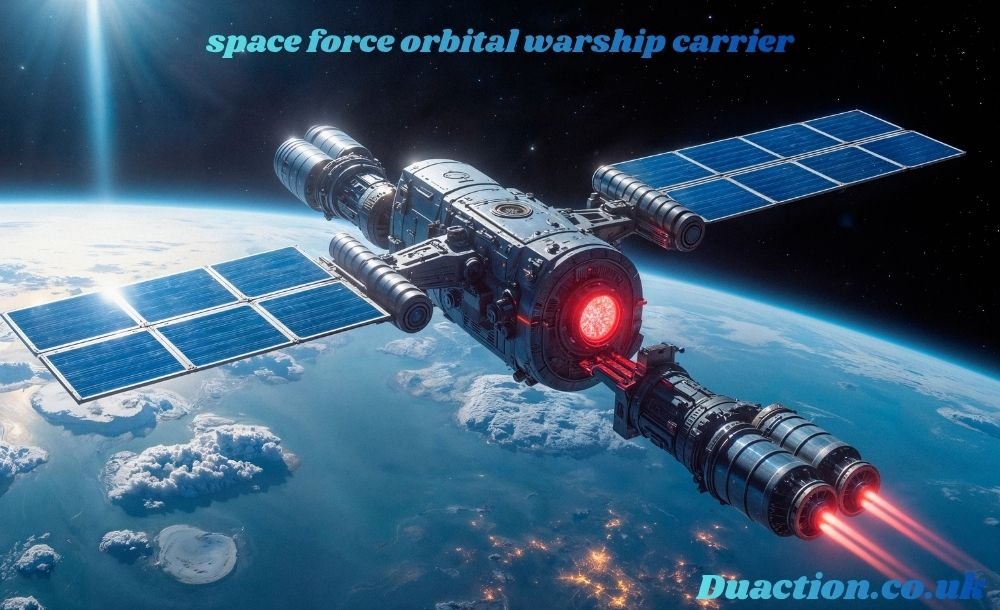
The idea of an Space Force Orbital Warship Carrier might sound like something pulled straight from science fiction, but it’s quickly becoming a serious topic in modern space strategy. As humanity becomes more dependent on satellites for communication, navigation, weather forecasting, and security, space is no longer just a peaceful frontier it’s a critical domain that needs protection. This shift has led to the emergence of concepts like space-based carriers, designed to operate as mobile hubs in orbit, capable of deploying and managing multiple spacecraft at once.
The Rise of Space Militarization
Space is no longer just about satellites, astronauts, and exploration; it’s becoming a strategic battlefield. Over the past decade, nations have quietly shifted their focus toward securing dominance beyond Earth’s atmosphere. The creation of dedicated space military branches marked a turning point, signaling that orbit is now considered a contested domain rather than a peaceful frontier. As threats like anti-satellite weapons and orbital interference grow, the need for advanced defensive and offensive systems has intensified.
Why This Concept Matters Today
The urgency behind this concept isn’t random; it’s driven by real-world geopolitical tension and technological competition. Nations are investing heavily in space capabilities because whoever controls orbit essentially controls communication, surveillance, and even elements of global security. With satellite networks powering everything from GPS to military intelligence, protecting these assets has become a top priority.
What Is a Space Force Orbital Warship Carrier?
A Space Force orbital warship carrier is an advanced spacecraft designed to operate as a mobile base in Earth’s orbit, capable of storing and deploying multiple satellites or space vehicles on demand. It functions much like an aircraft carrier in space, enabling rapid response missions without the need for launches from Earth. This concept enhances flexibility, speed, and strategic control in space operations.
Definition and Core Concept
At its core, the space force orbital warship carrier is essentially a massive spacecraft designed to act as a mobile base in orbit. Unlike traditional satellites that serve a single purpose, this carrier functions as a multi-purpose hub storing, deploying, and potentially even repairing smaller spacecraft.You can picture it like a naval aircraft carrier, but instead of jets, it carries satellites, drones, or interceptor vehicles. It sits in orbit, quietly waiting until it’s needed. When a mission arises, it releases the appropriate spacecraft into precise trajectories, completing tasks such as surveillance, defense, or communication restoration.
Real-World Development in 2026
What makes this topic especially fascinating is that it’s no longer purely theoretical. As of 2026, the orbital carrier concept is being actively developed with support from major aerospace initiatives. Reports indicate that partnerships between military organizations and private companies are driving this innovation forward.One key development involves a project designed to store and deploy multiple spacecraft directly from orbit, drastically reducing response times. Early prototypes and demonstration missions are already being planned, signaling that this technology could soon transition from concept to operational reality.
How the Orbital Warship Carrier Works
The space force orbital warship carrier relies on advanced technologies like high-efficiency propulsion systems, AI-driven navigation, and autonomous control for long-term operations in orbit. It also uses sophisticated sensors and communication networks to detect threats and coordinate deployments in real time. Additionally, durable materials and radiation shielding ensure the carrier can withstand the harsh environment of space. Together, these technologies enable reliable, rapid, and flexible space missions.
Pre-Positioning in Orbit
The magic of this system lies in its positioning. Instead of launching assets when needed, the carrier is placed in a strategic orbit ahead of time. This could be low Earth orbit for quick response or higher orbits for broader coverage.Once in position, the carrier acts like a warehouse in space. It holds multiple spacecraft, each ready for deployment. This pre-positioning eliminates the delays associated with traditional launches, including weather conditions, scheduling conflicts, and rocket availability.
Storage and Deployment Mechanism
Inside the carrier, spacecraft are stored in a protected environment, shielded from radiation and debris. When needed, the carrier opens and releases them into specific orbits, much like launching aircraft from a carrier deck.This process is highly precise. Each deployment must account for orbital mechanics, ensuring the spacecraft reaches its target efficiently. Once released, these smaller units can perform tasks independently, ranging from surveillance to defense operations.The brilliance of this system lies in its simplicity. Instead of reinventing space travel, it optimizes it making it faster, more flexible, and far more responsive.
Key Features and Capabilities
The key features and capabilities of an orbital warship carrier make it a highly advanced space platform designed for rapid response, flexibility, and strategic orbital operations.
- Rapid Deployment: Quickly releases satellites or spacecraft into orbit when needed.
- Multi-Mission Use: Supports surveillance, communication, defense, and scientific tasks.
- Orbital Readiness: Positioned in space for immediate operational response at all times.
- High Precision Control: Uses advanced navigation systems for accurate deployment.
- AI Integration: Smart systems manage operations and optimize mission performance in real time.
Rapid Response Deployment
One of the most powerful features of the orbital warship carrier is its ability to respond almost instantly. Traditional launches can take months, but this system reduces that timeline to mere hours.This capability is a game-changer in scenarios where timing is critical. Whether it’s replacing a damaged satellite or countering a threat, the carrier ensures that action can be taken without delay.
Multi-Mission Flexibility
Another standout feature is versatility. The carrier isn’t limited to a single mission; it can handle multiple roles depending on the payload it carries. This includes:
- Surveillance and reconnaissance
- Communication support
- Defensive operations
- Scientific missions
This flexibility makes it an incredibly valuable asset, capable of adapting to changing needs in real time.
Technologies Powering the Carrier
The technologies powering the orbital warship carrier are built on advanced propulsion systems, artificial intelligence, and high-precision orbital mechanics. These systems work together to keep the carrier stable in space while enabling fast and accurate deployment of satellites or defense units. Cutting-edge sensors and AI-driven controls help monitor space conditions in real time, ensuring smooth operations. Together, these technologies make the carrier a highly efficient and responsive platform in Earth’s orbit.
Propulsion Systems
Advanced propulsion systems are essential for maintaining and adjusting the carrier’s orbit. These systems must be efficient, reliable, and capable of long-term operation without frequent refueling.Future designs may incorporate nuclear-electric propulsion or other advanced technologies, enabling greater maneuverability and endurance.
Advanced Sensors and AI
The carrier relies heavily on sophisticated sensors and artificial intelligence to monitor its surroundings. These systems track objects, detect threats, and assist in decision-making processes.AI plays a crucial role in managing complex operations, from deployment timing to navigation. It ensures that the carrier operates efficiently and responds effectively to dynamic conditions.
Strategic Advantages
Orbital warship carriers offer major strategic advantages by enabling rapid deployment of satellites and defense systems directly from space. They provide continuous presence in orbit, allowing faster response to threats and reducing dependence on ground-based launches. This capability strengthens space dominance and ensures critical systems like communication and surveillance remain operational. Overall, they enhance both flexibility and resilience in modern space operations.
Military Dominance in Space
Control of space assets translates directly into strategic advantage on Earth. The orbital warship carrier enhances this control by providing rapid deployment and persistent presence.It allows nations to maintain a constant watch over critical areas, ensuring that they remain one step ahead of potential threats.
Faster Satellite Replacement
Satellites are essential for modern infrastructure, and losing one can have serious consequences. The carrier’s ability to replace satellites quickly ensures continuity and resilience.This capability is particularly important in conflict scenarios, where maintaining communication and surveillance is vital.
Challenges and Limitations
Orbital warship carriers face significant challenges, including extremely high development and maintenance costs, complex engineering requirements, and long deployment timelines. They are also vulnerable in orbit, as their predictable paths can make them targets for anti-satellite weapons or space debris. Additionally, legal and ethical concerns surrounding the militarization of space continue to create uncertainty around their widespread use.
Vulnerability in Orbit
Despite its advantages, the carrier is not invincible. Its predictable orbit makes it a potential target for anti-satellite weapons.This vulnerability highlights the need for advanced defense systems and strategic planning.
Cost and Engineering Barriers
Building and maintaining such a complex system is incredibly expensive. It requires cutting-edge technology, extensive research, and significant investment.These challenges mean that widespread deployment may take years, if not decades.
Global Competition in Space Warfare
Global competition in space warfare is rapidly intensifying as major powers invest in advanced orbital technologies and defense systems. Nations are striving to secure dominance in space because control over satellites directly impacts communication, surveillance, and national security. This growing rivalry is pushing innovation forward while also raising concerns about potential conflicts beyond Earth. As more countries enter the space domain, the race to establish strategic superiority in orbit continues to accelerate.
U.S. vs China and Other Nations
The race for space dominance is intensifying, with multiple nations investing in advanced technologies. While the U.S. is developing orbital carriers, other countries are exploring similar concepts.This competition is driving innovation but also raising concerns about escalating tensions.
Emerging Space Defense Race
As more countries enter the space domain, the potential for conflict increases. The orbital warship carrier is both a symbol of progress and a reminder of the challenges ahead.
Ethical and Legal Considerations
Ethical and Legal Considerations focus on how space-based military technologies align with international laws and shared human values. Existing treaties aim to keep space peaceful, but advanced systems like orbital carriers challenge those boundaries. There are growing concerns about weaponization, accountability, and the risk of conflict extending beyond Earth. Balancing innovation with responsibility remains a critical issue for the future of space governance.
Space Treaties and Regulations
International treaties aim to keep space peaceful, but evolving technologies are testing these boundaries. The introduction of military platforms in orbit raises important questions about regulation and accountability.
Militarization Concerns
The idea of weaponized space systems sparks debate about the future of humanity in space. Should space remain a shared resource, or will it become another arena for conflict?
Future of Orbital Warship Carriers
The future of orbital warship carriers looks increasingly promising as space technology continues to evolve and global interest in space security grows. These advanced platforms are expected to become more efficient, autonomous, and capable of handling multiple missions at once. As innovation accelerates, they may play a key role not only in defense but also in satellite management and deep-space operations. Ultimately, they could reshape how humanity operates and safeguards its presence in space.
Expected Developments by 2030+
Looking ahead, advancements in technology could make orbital carriers more efficient, capable, and widespread. Demonstration missions planned for the near future will likely shape their development.
Long-Term Impact on Humanity
The impact of this technology extends beyond military applications. It could influence exploration, communication, and even our understanding of space itself.
Conclusion
The space force orbital warship carrier represents a bold leap into the future of space operations. It blends innovation with strategy, offering a glimpse into a world where space is not just explored but actively managed and defended. While challenges remain, the progress made so far suggests that this concept is more than just imagination, it’s a sign of what’s to come.
FAQs About Space Force Orbital Warship Carrier
1. Is the space force orbital warship carrier real?
Yes, it is currently in development as part of advanced space defense initiatives, though it is not yet fully operational.
2. What is its main purpose?
Its primary role is to store and deploy spacecraft quickly, acting as a space-based launch platform.
3. Can it be used for combat?
While often described as a “warship,” its current focus is more on deployment and defense rather than direct combat.
4. How fast can it respond to threats?
It can deploy spacecraft within hours, compared to months for traditional launches.
5. When will it become operational?
Initial demonstrations are expected around 2026, with further development continuing into the next decade.